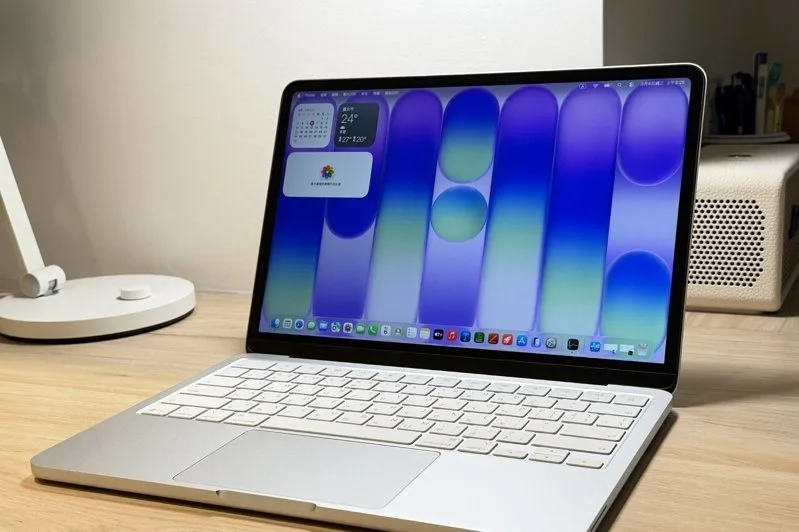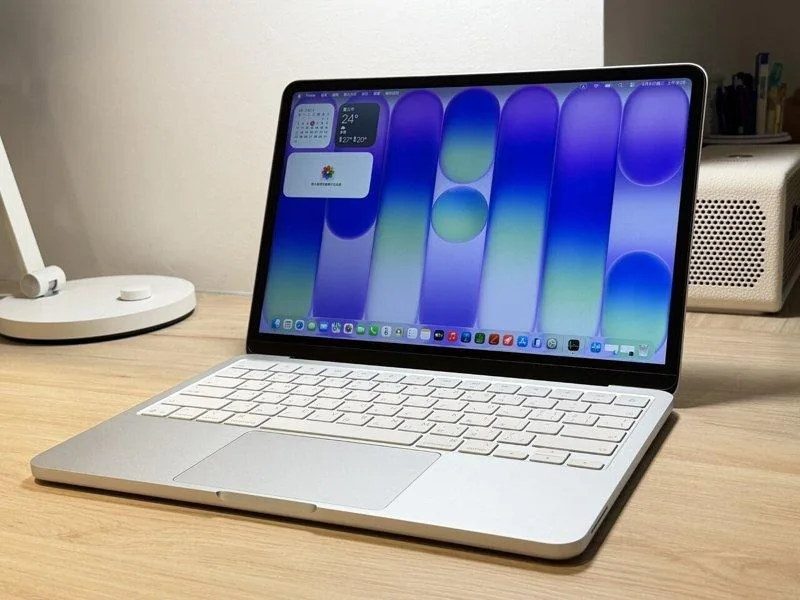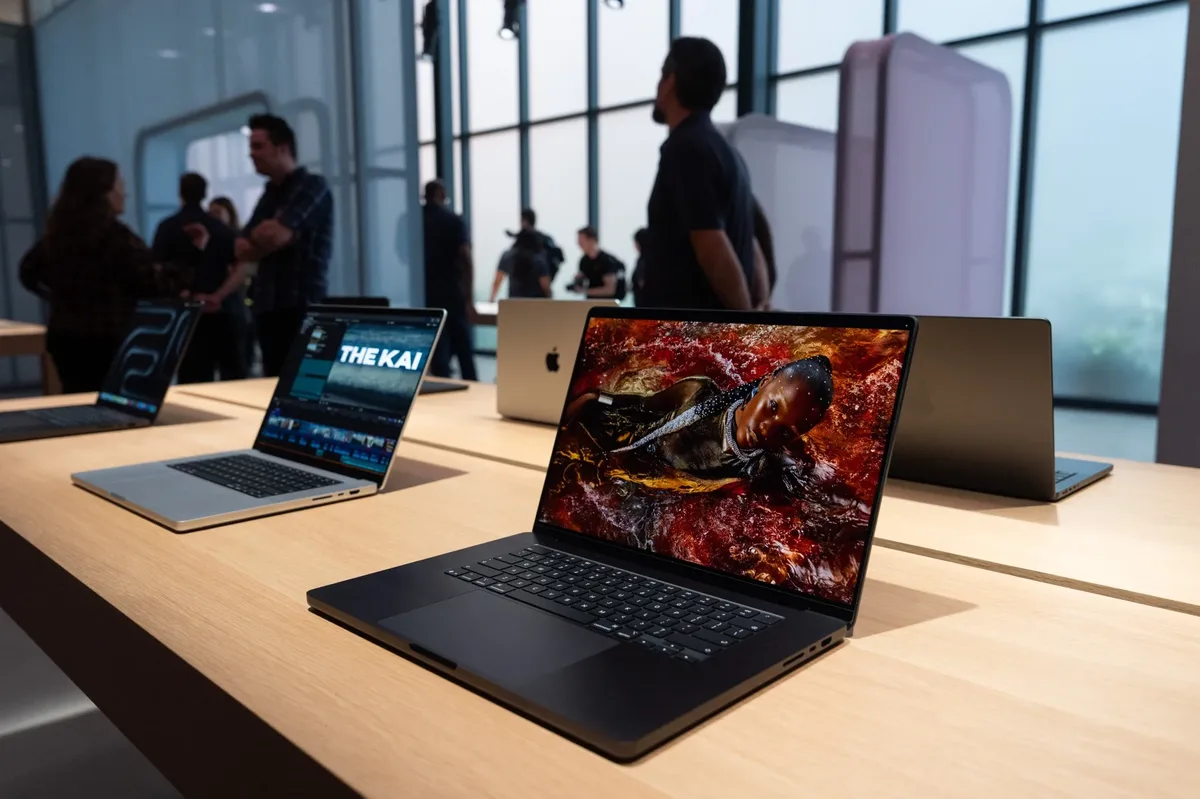
Apple will release its first touchscreen MacBook with OLED display powered by current M5 Pro and M5 Max chips between late 2026 and early 2027, according to multiple reports [1, 2, 3]. The new model, code-named MacBook Ultra, will feature a Dynamic Island interface and updated industrial design [3, 4].
The tech giant will launch a low-end M6 chip for entry-level Macs in late 2026 but will forgo high-end M6 Pro and Max versions, a significant departure from its usual chip upgrade strategy [5, 6, 7, 8, 9, 10]. Mark Gurman noted, "Apple will not release Pro or Max versions of its upcoming M6 chip. If this does come to pass, it would be the first time Apple has only offered a base version of its in-house silicon" [8]. An anonymous source explained that Pro and Max chips typically power high-end Mac mini, Mac Studio, and MacBook Pro, while base chips serve entry-level MacBook Pro, Mac mini, iMac, and some iPad models [6].
The M6 chip will offer improved specs over the M5, including higher memory bandwidth of about 200GB/s compared to 153GB/s in the M5, an upgraded neural engine, and a redesigned GPU supporting up to 12 cores [6, 7, 10]. Despite skipping the high-end M6 variants, Apple is working on an M5 Ultra chip rumored to feature around 36 CPU cores and 80 GPU cores. This chip might launch alongside a new Mac Studio in late 2026 to maintain high-end performance until the M7 series arrives [10].
Starting early 2027, Apple plans to introduce the M7 series chips, beginning with a base M7 chip that will emphasize AI processing with around 240GB/s memory bandwidth [6, 7, 8, 10]. Higher-end M7 Pro and M7 Max chips are expected by late 2027, with the M7 Ultra arriving in 2028, offering roughly double the performance of the Max variant [6, 8, 3, 9, 10]. The architecture of the M7 series will prioritize AI and graphics workloads with increased memory bandwidth and updated designs [6, 7, 8, 10].
Some reports differ on whether the touchscreen MacBook will use the M6 chip or stick with M5 Pro and Max chips, but several sources favor the latter for the late 2026 to early 2027 timeframe [1, 2, 3] while others remain uncertain about the impact of skipping M6 Pro/Max on the touchscreen MacBook [8].
Apple's decision to skip high-end M6 chips marks the largest chip strategy shift in the company's history [5, 6, 8, 9, 10]. The next key milestone will be the release of the base M6 chip for entry-level Macs in late 2026, followed by the M7 series launch starting early 2027.