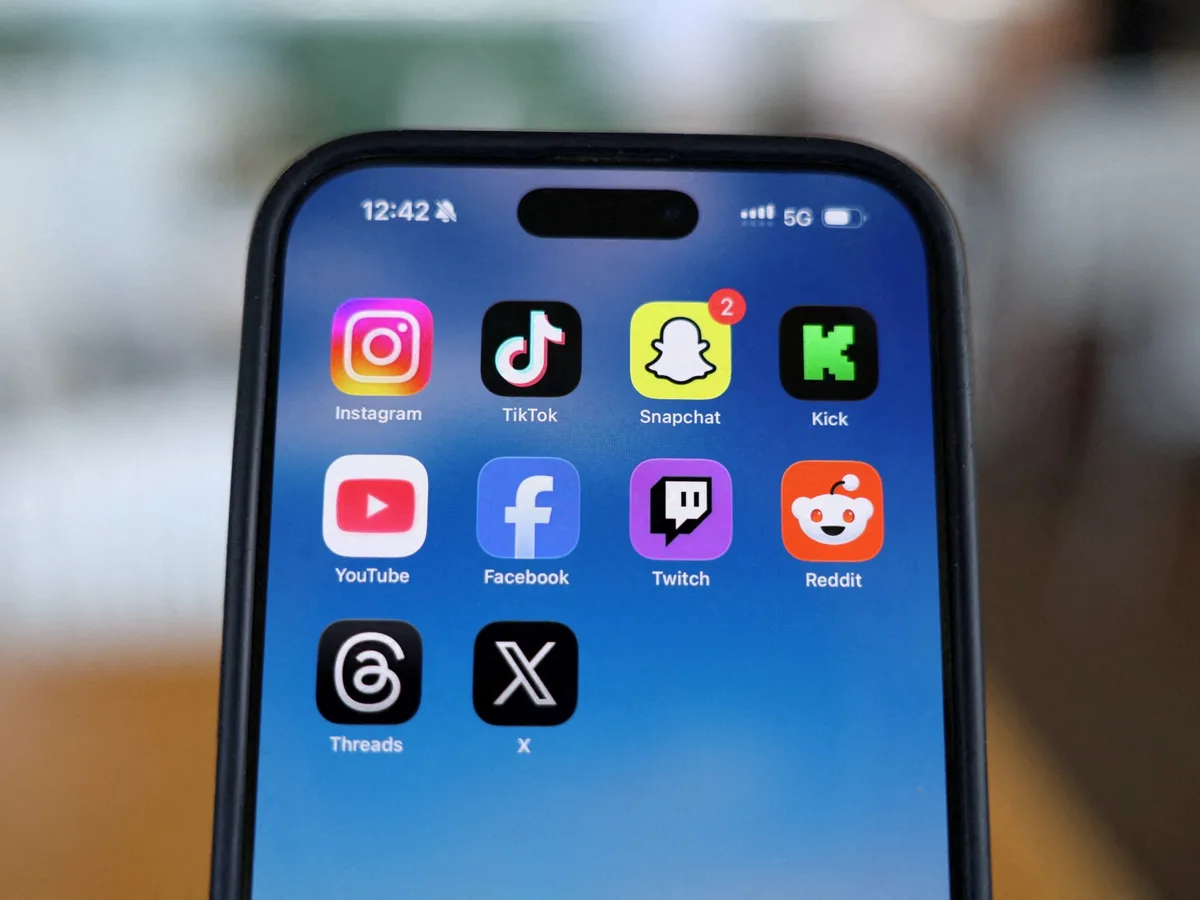
Canada's government introduced the Digital Safety Act bill in parliament on June 10, 2026, aiming to ban children under 16 from holding social media accounts unless platforms meet strict child safety standards [1, 2, 3]. The bill would require platforms to implement age verification systems to enforce the ban [4, 5].
The legislation also targets AI chatbot services. It requires companies to reduce harmful content risks and set up crisis intervention if users express self-harm or violence intent [6, 2, 7]. Platforms must label AI-generated content and swiftly remove deepfakes and harmful material [8, 7].
Violations of the bill could trigger fines up to 3% of a company's global revenue or 10 million Canadian dollars, whichever is higher [6, 5, 9]. The bill proposes creating a Digital Safety Commission of Canada to enforce rules and evaluate exemption applications [2, 8]. The commission is expected to be established 18 months after the law passes [1, 2].
The legislation covers traditional social media, live streaming, and adult content sites but exempts search engines and gaming platforms such as Roblox [3]. It aims to protect youth from bullying, sexual exploitation, hate speech, violence incitement, terrorism, and harmful imagery [6, 1]. Culture Minister Marc Miller said, "Social media platforms and AI chatbots are designed to capture attention. They do not support healthy childhood development and have become a source of anxiety, isolation, depression and a range of other mental health challenges for many young Canadians" [1]. Miller added the bill will help young Canadians "focus in school and learn real-world skills so they can thrive" [8].
The bill responds in part to recent Canadian mass shootings linked to AI usage and criticism of companies like OpenAI for not alerting authorities [6, 8]. Similar under-16 social media bans took effect in Australia in December 2025 and Indonesia in March 2026, with some European countries considering similar rules [6, 2]. Australia's ban deactivated around 5 million accounts within one month, though critics warn youths find ways to circumvent restrictions [4, 5, 10]. Education professor Sachin Maharaj said, "Obviously, kids will find their way around restrictions. But the real challenge is to change the way the apps work" [8].
The Digital Safety Act is expected to take about one year to pass through parliament and begin implementation [1]. The creation of the new Digital Safety Commission is planned for roughly 18 months after that [1].