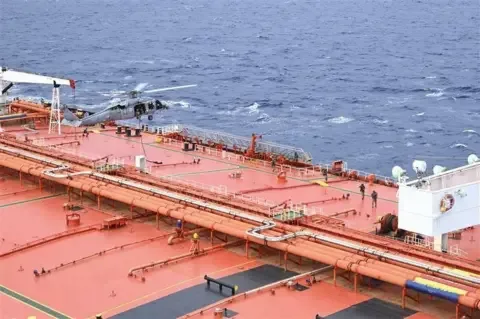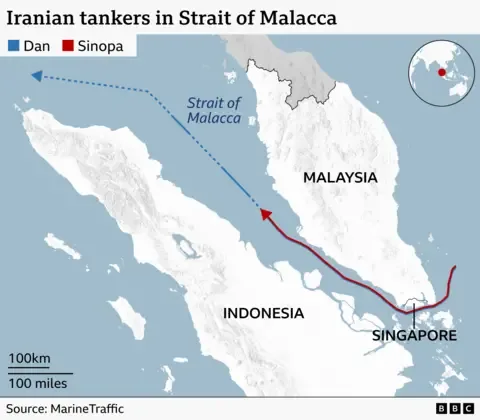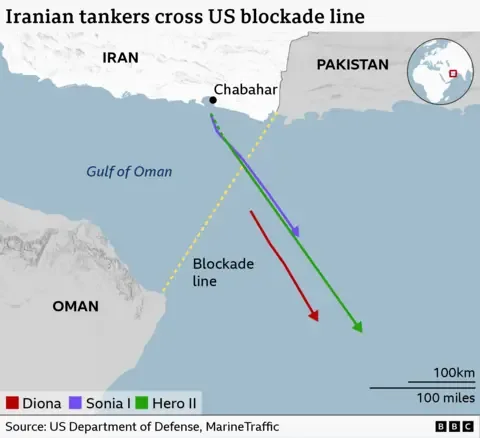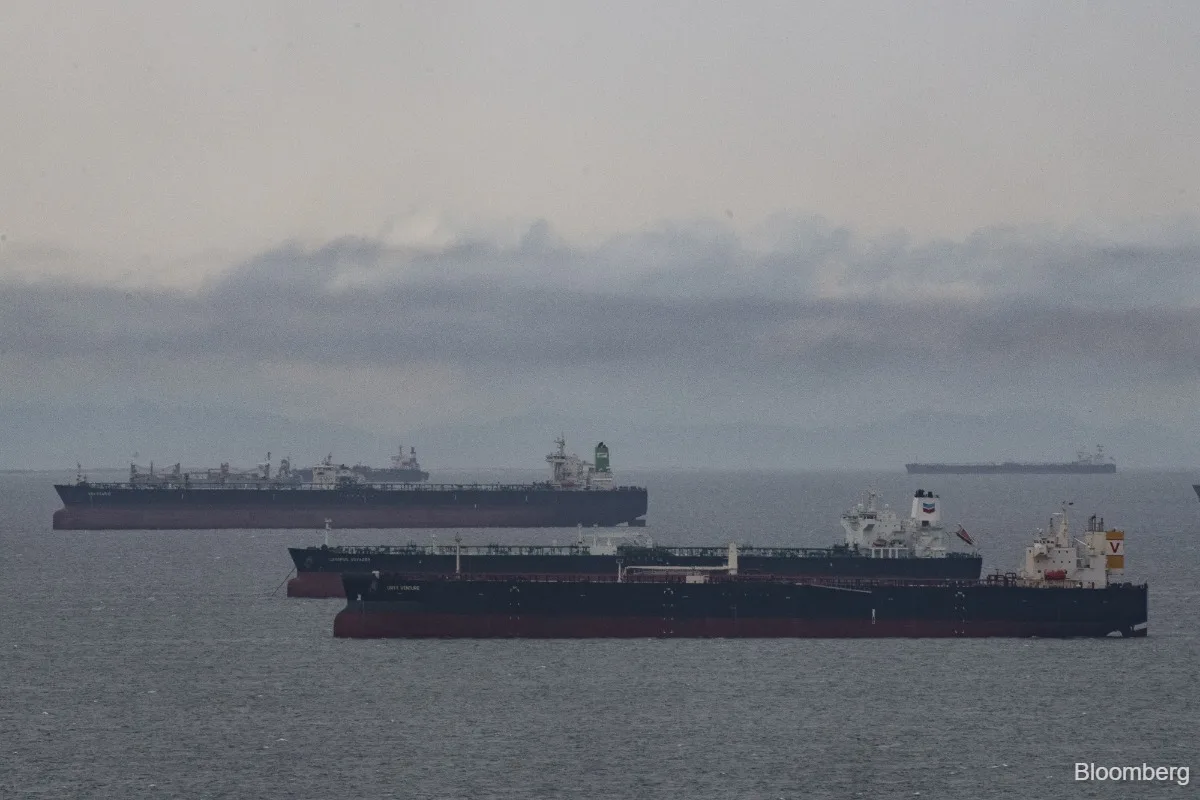
At least three Iranian oil tankers carrying about 4.8 million barrels of crude oil passed the US Navy blockade line in the Gulf of Oman and Strait of Hormuz between June 16 and 17, 2026. This marked Iran’s first oil exports in roughly two months amid ongoing peace efforts with the US [1, 2, 3, 4, 5, 6].
The vessels, owned by the National Iranian Tanker Company, included the Diona, Hero II, and Sonia I (also reported as Stream). Two tankers, Diona and Hero II, carried around 3.8 million barrels, while the third held approximately 1 million barrels [1, 2, 3, 4, 5, 6].
The passing of the blockade line came just as Iran and the US signed an interim Memorandum of Understanding on June 17 to end hostilities and restart negotiations on a final peace deal. The deal was expected to be signed in Geneva on June 19, with provisions for immediate lifting of some US sanctions on Iranian oil sales upon signing [1, 2, 3, 7, 4, 5, 8]. Senate Majority Leader John Thune said of the agreement, "Let's look at it and see what it actually is" [2].
Shipping data show a broader revival of Iranian exports, with 11 tankers departing the Chabahar port between June 17 and 19 carrying about 20 million barrels of crude oil. Several large tankers also resumed loading activities at Kharg Island, Iran’s main oil terminal responsible for about 90% of its oil exports [9, 10, 11, 12, 8].
Although the US military blockade of Iranian ports was officially still in place, Iranian tankers freely crossed the blockade line, suggesting a de facto end to restrictions. Michelle Wiese Bockman, a senior analyst at Windward Maritime Intelligence, said, "This is a sign that Iran is confident the blockade is over, even if the US has insisted it will be in place until Friday." She added, "Their apparent departure from the blockade suggests that other Iranian-trading tankers are also preparing to resume trading" [1, 4].
During the conflict, the Strait of Hormuz was effectively closed to Iranian crude exports, forcing shipments down to about 260,000 barrels per day in May 2026, less than a fifth of the 1.67 million barrels per day average in 2025 [1]. The reopening of the Strait and resumption of exports contributed to a drop in world oil prices [2, 3, 5, 6].
Despite the ceasefire between the US and Iran, Israeli strikes targeting Hezbollah in Lebanon continued, raising concerns about regional stability [2, 3].
The final peace deal was expected to be signed in Geneva on June 19. Negotiations will continue over 60 days on Iran’s nuclear program and broader sanctions relief following the agreement [2, 3, 7, 5, 6].